
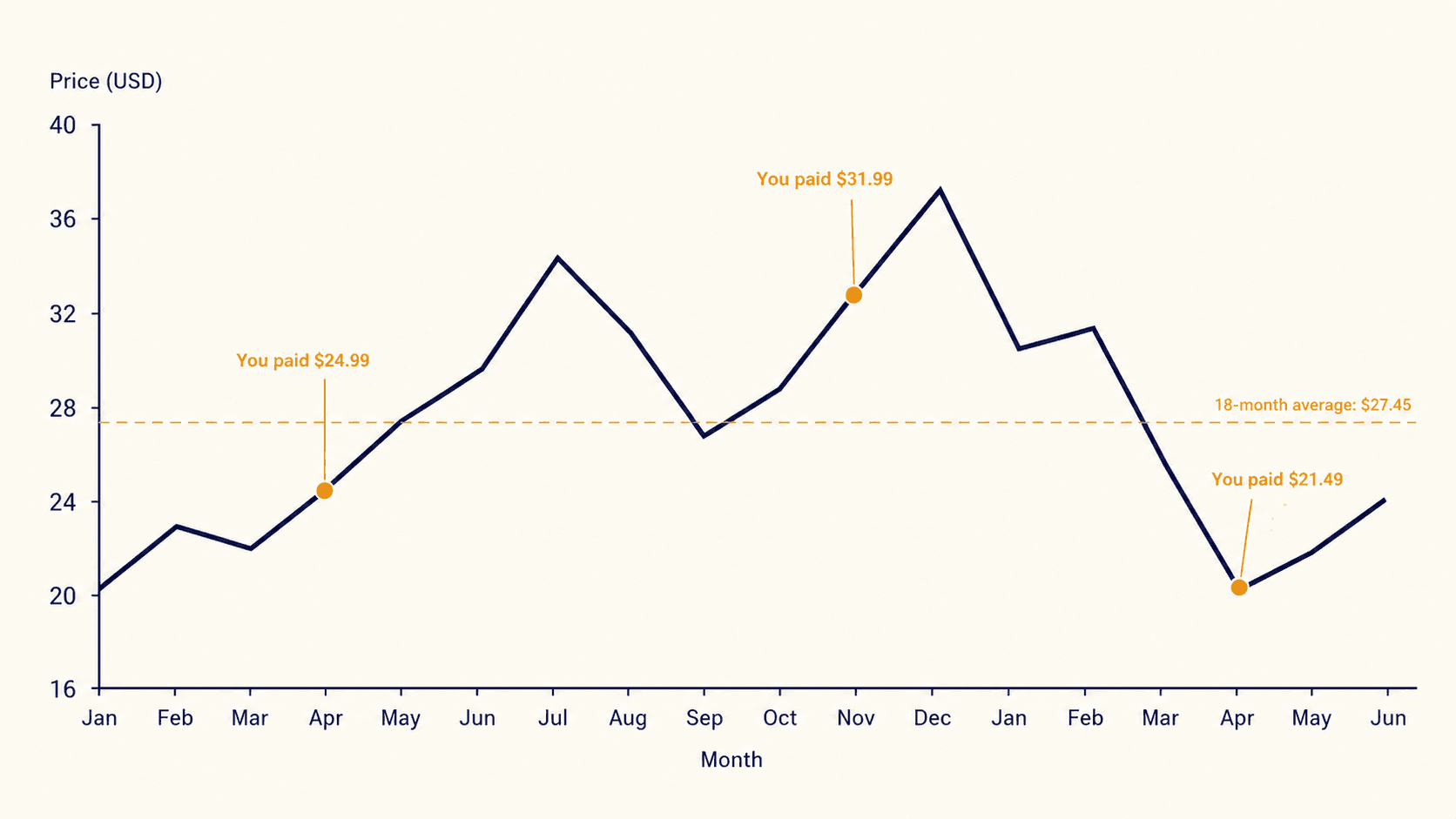
Amazon changes prices constantly. The same item can swing 30% in price between Tuesday and Friday. The same dog food you've been buying for two years may have quietly increased in price by $8 without you noticing.
Most people have no idea how much prices have changed on items they buy regularly. This guide explains how to track price history on your own Amazon purchases.
Why Amazon prices change so often
Amazon uses dynamic pricing, an algorithm that adjusts prices based on demand, competitor pricing, inventory levels, time of day, and dozens of other signals. An item can be listed at $24.99 in the morning and $31.99 that evening. During Prime Day or Black Friday, it might drop to $18.
This isn't unique to Amazon, but Amazon does it at a scale and frequency that no other platform matches. For one-time purchases, this matters less. For items you buy regularly, pet food, coffee, household supplies, it matters a lot.
The two ways to track Amazon price history
External price tracking tools (like CamelCamelCamel)
Tools like CamelCamelCamel track price history for Amazon product listings. You enter an ASIN or a product URL and see a chart of the listing price over time.
This is useful for deciding when to buy a specific product, but it has a limitation: it shows you the listing price history, not your purchase price history. And it's a completely separate tool you have to use proactively, product by product.
Your own purchase history (via AmazaSpend)
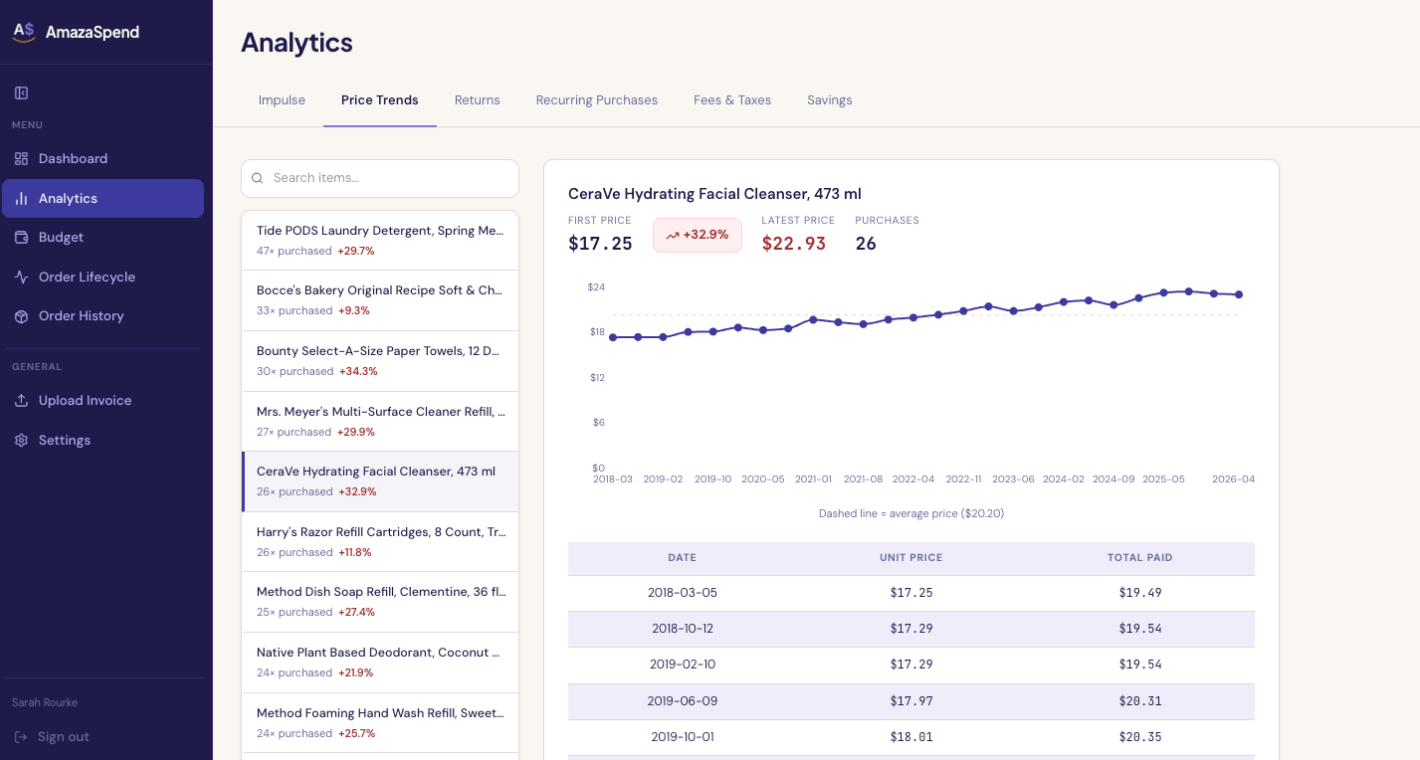
AmazaSpend takes a different approach. Instead of tracking the Amazon listing price, it tracks the price you actually paid for products across multiple purchases. If you've bought the same dog food six times over 18 months, AmazaSpend plots each purchase price on a timeline, so you can see exactly how your effective price has changed.
How to see your price history in AmazaSpend
- Upload your Amazon order history CSV (or connect the browser extension)
- Go to the Price Trends tab in your dashboard
- Search for an item by name or ASIN
- See the full purchase price history plotted on a chart
The chart shows:
- Every purchase date and price
- An average reference line (your effective average price over time)
- The delta between your first and most recent purchase (are you paying more or less?)
For items you buy repeatedly, this tells you something no external tool can: the actual trajectory of your out-of-pocket cost, accounting for any coupons, Subscribe & Save discounts, or Prime member pricing you received at the time.
What you'll typically find
A few patterns that come up frequently:
Gradual price creep on recurring items, household staples often increase 5–15% over 12–18 months. You don't notice any single increase because it's small. You only notice when you add them all up.
Subscribe & Save instability, contrary to what Amazon implies, Subscribe & Save prices aren't always the most stable. The underlying product price still changes, which changes your subscription price.
Promotional pricing you paid full price for anyway, sometimes you'll see that you paid $34.99 for something twice, and at both purchase dates it was on sale. Then once you paid $39.99 for the same item because you didn't catch the promotion. The trend chart makes this visible.
Using price trends to make smarter purchase decisions
Once you can see price history on your recurring purchases, you can make a simple rule: check the price trend before buying anything you've bought before.
If the price you're being shown is above your average, wait. If it's below, stock up.
This is especially useful for:
- Non-perishable household items (cleaning supplies, paper goods)
- Pet food and supplies
- Coffee, tea, or pantry staples
- Health and personal care items you buy monthly
Combining price trends with recurring purchase tracking
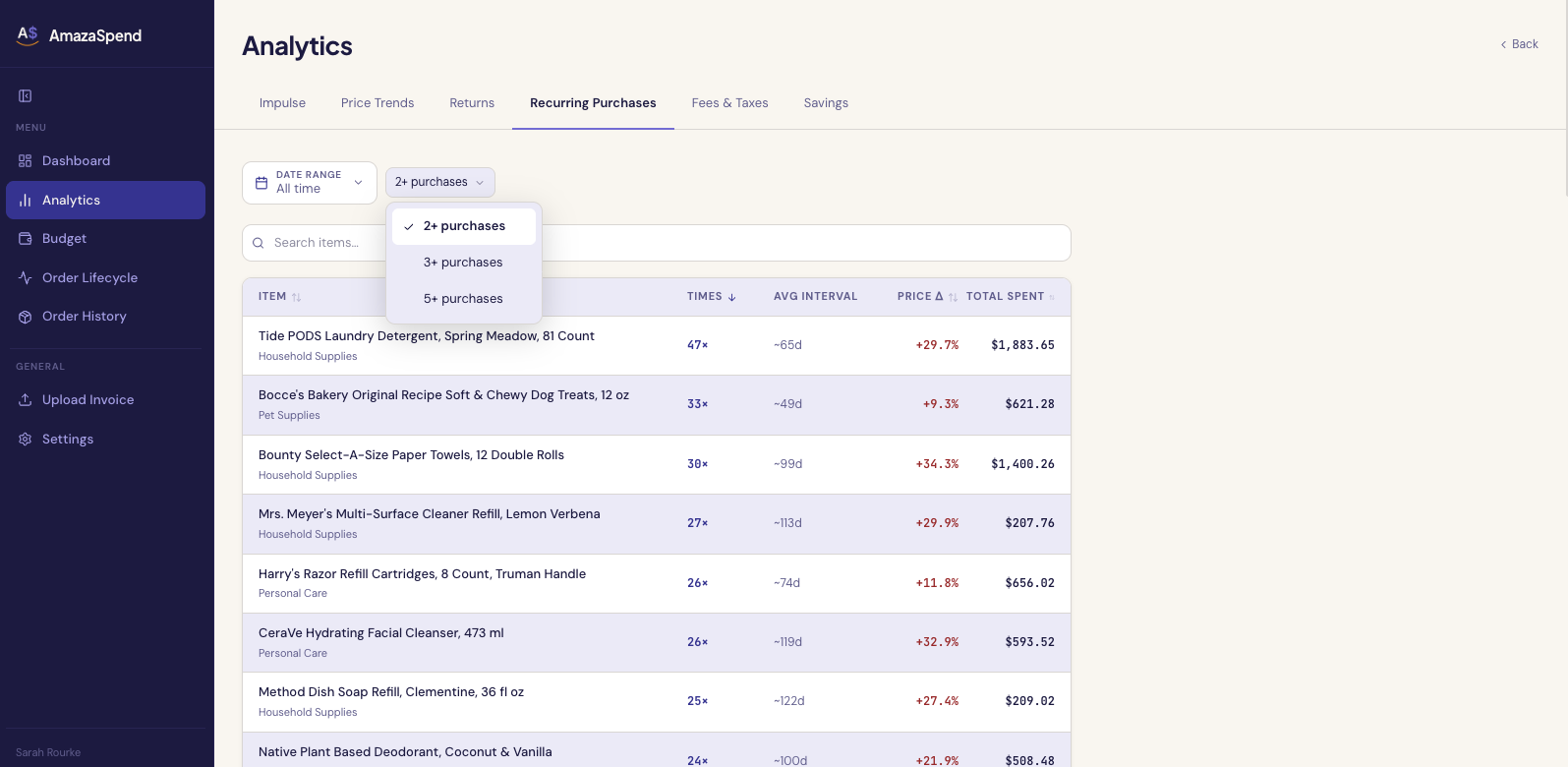
AmazaSpend also has a Recurring Purchases view, every item you've bought two or more times, sorted by purchase frequency. Pair this with Price Trends and you have a clear picture of: what am I buying regularly, and am I paying more or less for it than I used to?
These are the items worth watching. Not a one-time gadget purchase, but the coffee pods and dog food and shampoo you buy every four to six weeks.
The bottom line on Amazon price tracking
Amazon prices change. Your purchasing behavior creates a record of what you actually paid. Most people never look at that record, but it's sitting in your order history, waiting to be read.
See your price trends in AmazaSpend, 7-day free trial →